

2·
3 hours agoThis is awesome! Thanks for sharing
This is awesome! Thanks for sharing
No, it’s for browsing your self-hosted video library.

Greater digital independence. I currently use Voxist, which is… fine.
I don’t really want more corporate spyware on my phone from Google or my carrier or whoever. I’d prefer something FOSS, and private. That means on-device (or self hosted, but I don’t even know how that would work.)
Thanks, I’ll check this out!
Exactly my thinking. I’m old enough to remember buying those tiny cassette tapes.
They can’t leave a message. No different than any service, although my phone is functionally never dead. In my case it’s just not an issue.
Important to consider to be sure!
For the immediate future, Europeans are personally and politically invested in digital sovereignty. The best way to get ahead quickly is to invest in open source projects. For the time being, interests seem to be aligned in favor of FOSS.
Of course, you are right. It can’t last forever.
I think its a dead project unfortunately, but maybe someone will fork it.
Seenva will detect text and frames and use smart zooming to make comics readable on smaller screens.
Europe is increasingly funding projects through NGOs and government foundations. If FOSS software is a public good, then we should devote public funds to it.
Some projects offer paid hosting for those who can’t or don’t wasn’t to self-host. Some (particularly mobile apps) push a paid version to stores to subsidize those using FOSS sources to download.
My comment was not specific to GrapheneOS. Although I do use it and trust them when it comes to security assessments. It’s not perfect functionality, but it should provide most of the basic functions. I would have to imagine if you’re using Shizuku that it can install it with the proper permissions. Someone mentioned checking the XDA forums, which is probably a good idea before you make any serious changes.
Yeah. I’ve been using it for years.
GrapheneOS prefers using sandboxed Google Play instead for security and functionality reasons, but they are pretty obscure. In theory, microG could be used to install a malicious app with elevated permissions, since it has the ability to bypass security checks. If you trust the apps you install, then it’s a non-issue. It’s potentially less functional as an open-source implementation, since it is not a perfect 1 to 1 replacement of Google services. You may find that there are certain functions it just can’t do. I don’t know of any specific examples.
I use navidrome. You could set it up with individual accounts and use any Subsonic compatible player. I’m not sure what you mean by specific time periods, so I’m not sure about that.
It has a very serviceable web app, and lots of front end clients. I like Tempus on Android, and Strawberry on PC.
I’ve found that navidrome is just more stable and usable than other server apps. Yes, you could do it through Home Assistant or Jellyfin or NextCloud, but those apps are not purpose-built for music. Just my 2 cents.
Thank goodness! This is getting silly!
Following because I am really a beginner myself. That said, I have been self-hosting a dozen or so services for about 2 years now. It is very intimidating to begin.
A docker container is basically a sort of virtual machine stripped down to what is precisely essential for a given container. That means that apps running in docker are repeatable and will run identically on any hardware and software.
When it comes to networking, you can choose to have services exposed to the internet or not. If they are not exposed, you can only access them over a local network. That might be fine for a nightly backup or HomeAssistant that’s only operated locally. It’s a good place to start.
You can also use a certain type of VPN to create a virtual local network. That allows you to access your home server from any connected device. That’s what I do, using Tailscale. It is fine if you are only connecting to the server from a limited number of devices, since each one will need to be logged in to the same network.
If you’re in a conversation about Shizuku, you should probably be downloading apps from the source. I’ve donated the equivalent of buying the app, but you don’t have to pay anything to get the full features.
A lot of open source developers subsidize their users by charging on the Play Store while offering the complete app on F-Droid or other code repo (like GitHub).
The short answer is yes.
Android auto has weird checks and requirements for apps to work. I use shizuku for that on GrapheneOS.
It’s also helpful with little things like lemmy redirect or SD maid.
Actually very helpful. Thank you!
Thanks. Samsung doesn’t allow multiple users on their phones (apparently they allow it on tablets). However, this led me to the Samsung kids mode, which turns out to be a good solution in my particular case.



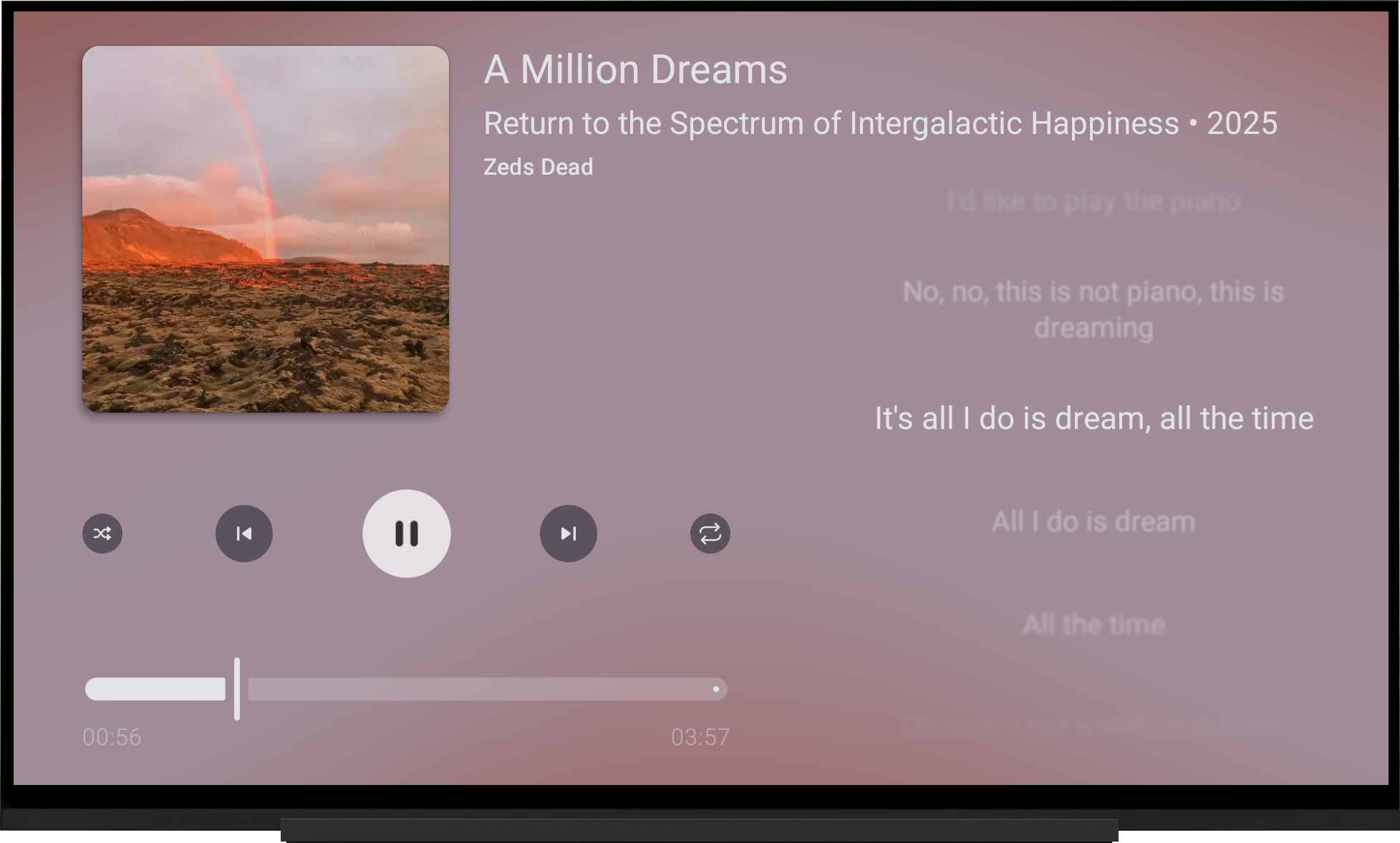



It does connect to Plex and Jellyfin. Someone else also posted a similar open source project in the comments.