

7·
1 day agoBoycotts are by definition non-violent. You can’t just use an outdated definition or make up your own if you want people to understand what you’re trying to communicate. Just say riot, uprising or revolt instead.
Boycotts are by definition non-violent. You can’t just use an outdated definition or make up your own if you want people to understand what you’re trying to communicate. Just say riot, uprising or revolt instead.
Why would RAM manufacturers or large tech companies that have both stopped caring about consumers as customers be bothered by a boycott done by said consumers? Are you not seeing the problem here?
Consumers do not have the leverage they once had anymore. Last year, 70% of RAM went to AI. This year, it’s likely even more and who knows how few crumbs they are leaving for us to lick up from the kitchen floor in 2027.
It’s an acquired taste.
I played a mod that turned Escape from Tarkov into a singleplayer game a few years ago (never played it online myself); a PvE mode has since been officially released, but I haven’t looked into it. The tension and intensity of it, the risk/reward to every move you make combined with the pretty high realism do make for an interesting package. Incursion Red River really impressed me for pretty much the same reasons, even in the relatively early state that it was in when I last tried it out. I lost any interest in online gaming a long time ago, so I only care about PvE.
My favorite has to be Witchfire though, thanks to its fantasy steampunk setting and immensely satisfying combat that reminds me of the original Painkiller (which makes sense - both are from Poland), but it’s way more polished in every way (no pun intended). It is admittedly much easier than the above two and needs more content, but what’s there is already very impressive and - in my eyes at least - a neat introduction to the genre, especially if you don’t care for modern military stuff. Witchfire is also one of the best-looking games out there right now, both in terms of tech and art style.

Is that a thing in Canada?
You can talk to me directly instead of behind my back, you know?
I’m not ignoring the international division of labor. Every country is part of it and every country has been part of it in the past, including Socialist ones.
I have a hunch you took this personally. Nah, I must be hallucinating.
socialists are even worse than capitalist
Their historic record is considerably worse. I don’t even need to bring up gulags, mass starvation and the abysmal living and human rights conditions of every Socialist regime throughout history to support this point (but it doesn’t hurt).
This does not mean that pure capitalism is fine either (I used to consider myself a smug and enlightened centrist - can you tell?), but it tends to work the best with a fair bit of socialism injected in key areas (social safety net, high taxes on wealth, strong regulations and institutions, robust democratic decision making, lots of economic freedom and high social mobility), as in the Nordic model, which is arguably the best thing humans have come up with so far.
extremely inefficient chip production collapsed Soviet Union economy
I didn’t say that, but it was definitely a strongly contributing factor. I mentioned East Germany in particular, since it spent a fortune on setting up a competitive chip industry to achieve parity with Western and Japanese companies, but failed. The debacle that was their infamous 1 MBit chip, which cost 1 Billion Ostmark to develop (at a time when the country was struggling with high debts it owed to West Germany), but never achieved more than 20% yields in pre-production and was never production-ready illustrates just how hopeless the endeavor was. By the time the chip was in said pre-production state, Japan was already producing 4 MBit chips en masse, at economic yields, of course. I can’t find the numbers on how much of the state budget went into this, but it was a considerable portion, at the cost of everything else. Literally their hail Mary.
Ironically, these investments did pay off in the long run, just not for them: The area where the East German government concentrated its chip production is now known as the German silicon valley. Investments into education and research in particular laid the groundwork for the current and very competitive market-driven chip industry and other IT companies that have settled there.
current-day tech giants as desperate today in attempt to save “their economic system” as Soviet Union and East Germany were in '70s and '80s?
No. Current-day tech giants are in search of something that promises them more perpetual growth in a finite world, where almost all viable technological niches are already saturated. Smartphones are a solved issue: Everyone has settled on glass rectangles with high-res touchscreens, the hardware and software for them is so mature that even ten year old devices are still sufficient today. Gimmicks like foldables are expected to remain fringe. Same with conventional PCs and laptops: Times when a device was obsolete after four years or sooner are long over. Cloud services and virtualization have similarly reached their peak, to the point that there’s a counter movement back towards local IT.
All of this means that easy avenues for more growth are already clogged up, so after some brief excursions into crypto and NFT, earlier and much smaller bubbles, it’s AI with its promise to replace costly human white collar labor with cheaper software that doesn’t talk back, doesn’t form unions or have uppity ideas about redistributing wealth or getting rid of greedy CEOs. Digital slaves, if you will, ideally as intelligent or more intelligent than humans, but without any ability to shape its own destiny. It’s not happening, of course, just as delusional as trying to automate yourself out of the inherent issues of centrally planned economies, but everyone needs to pretend that it might one day, because their livelihoods depend on it. They have invested too much, are in too deep to pull out, are afraid that if one of them does, the house of cards comes crashing down.
I will not pretend that any of this is particularly insightful, but since you appeared to have struggled with the historic parallels, I thought I’d elaborate on each point a little. I hope this doesn’t cause you any additional pain, but if it does, you should be able to deal with it as a strong, rugged Socialist individual used to hardships in service of a better future. No pain, no glorious workers’ and peasants’ revolution, am I right?
How does a defensive alliance restrict economic systems?
Given your username and where it’s registered, you will not like the answer, but: Socialists were also notorious for cooking the books to hide their failures, even more so than dirty capitalist pigs. It’s one of the reasons why the system failed: Since everyone at every level was doing it, the already hopelessly out of their depth central planners had no reliable data to work with.
This doesn’t make the AI bubble okay, of course. I’m only writing this, because your smug comment combined with your user name are particularly ironic.
Another thing: Had LLMs like we have them now been available in the '70s and '80s, the likes of East Germany and the Soviet Union would have been all over them in a desperate bid to save their economic system, just like they tried to with computerized planning and automation back then, wasting ridiculous and economically ruinous amounts of resources on extremely inefficient chip production before they collapsed. In a way, current-day tech giants and the corporate world in general are repeating this mistake in a desperate bid to take part in the “next big thing” in order to get out of the stagnation they found themselves in.
Call it history repeating itself or rhyming - either way, I’m noticing some patterns here.
Yup. Bought one of the first Steam Decks. Been having a great time with it so far, but I already had to repair it once (SSD overheated - thankfully a part that’s not proprietary). It will not last forever and the battery is likely going to be the next part that breaks. I am not looking forward to playing battery lottery on Aliexpress.
What do we learn from this? Valve isn’t our friend either. I never thought they were, I’m simply already caught in their ecosystem and bought the best PC handheld there was when it came out (and it still is, in my opinion, even though there are faster alternatives), but the company does enjoy a lot of leeway to the point of worship by some due to other firms in the gaming space being considerably worse.
It might very well be that the reasons for this are out of their hands, similar to the AI-bubble-fueled price hikes for RAM, but especially since they so gleefully advertised the repairiability of this device when it came out, silently ending the supply of spare parts is most certainly not a good look. It would have certainly softened the blow had they announced it and provided a reasonable explanation - and it would also cast a much smaller, if still considerable, shadow on the already troubled Steam Machine.
It’s quite a baffling mistake, to be honest, for two reasons:
First of all, did they not take into account that people would notice, which immediately turns it into a much bigger story due to the attempted secrecy? You get ahead of bad news as a company, always, instead of letting it happen. Secondly, the LCD Deck was sold worldwide until at least the end of the year and is still available from Steam in some regions. Did they seriously not stock enough parts, did they plan so poorly, were their contracts so terribly drafted that the supply of spares has already stopped? I get that they are a tiny player in the hardware space, which means they do not have the negotiating power of someone like Sony, but still, this is not a good look.
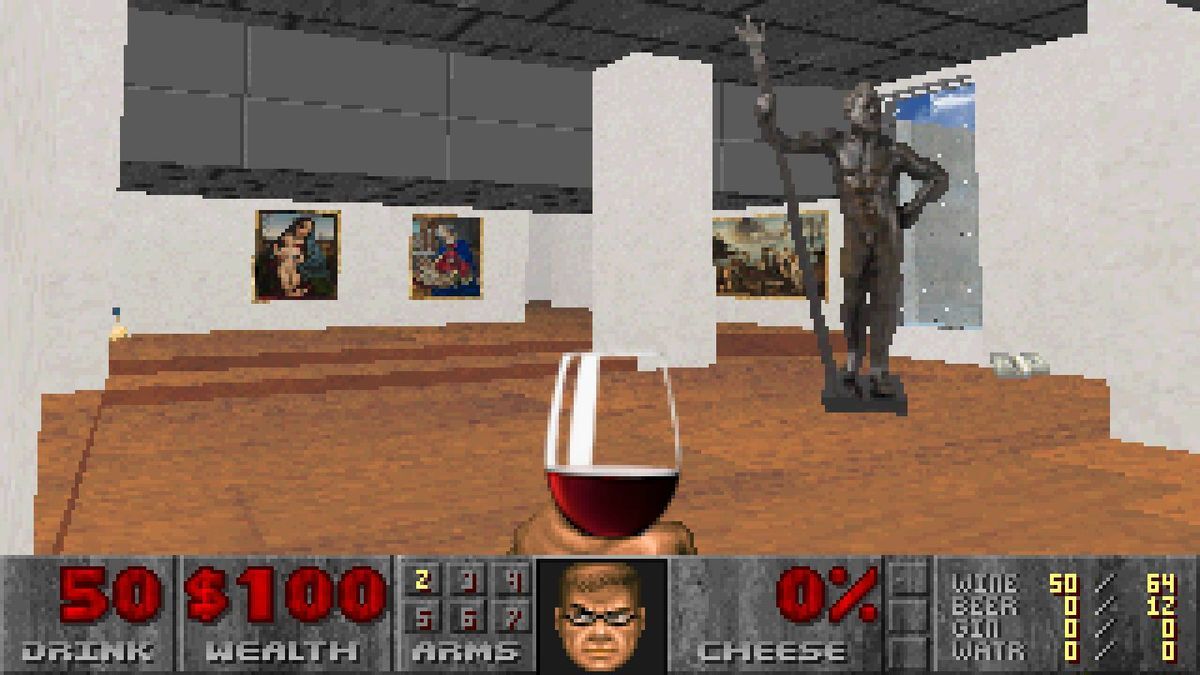
No idea why, but I kind of want a DOOM mod about liberating Stardew Valley from a demon infestation now.
There was also a background check involved, which I forgot to mention. But overall, it’s very much the former and not even close to something like the latter.
Not even that these days. The good jobs are for people with connections. Those who made it through based on merit are more likely to end up as office drones that can be let go if the CEO wants a higher quarterly bonus to spend on gold trim for his third yacht.
I was hired during the pandemic and it was quite an interesting experience to get there. They had an online assessment center, several hours (with breaks) of all sorts of quizzes, questions and tasks, mostly intelligence and memory-related, combined with math, general knowledge, language proficiency and a section on personality and personal preferences, with a relatively limited focus on IT questions at the end that felt tacked on for the job. There was no surveillance during it - no webcam requirements or anything. They just sent me a link and I could complete this timed test at a point in time of my choosing, in one go. Since it wasn’t very difficult at all and there was more than enough time, I had no issues with this one.
Before the interview, I was handed a 20 minute condensed version of largely the same type of questions to be completed in person (very small room, alone, under supervision, to eliminate any possibility of cheating), which I completed in no time, and finally an extensive interview (IIRC about 45 minutes) in front of what I can only describe as a tribunal of eight more or less relevant people sitting in a half-circle in front of a chair for the interviewee (at a distance due to COVID), most of which would just silently judge me with their eyes and take down notes as two to three of them switched between interrogating, I mean, interviewing me. They were actually very friendly, but it did feel quite intense. I was extremely nervous in the beginning, even stuttered a little, but as the interview went on, my nerves calmed down. None of the questions were surprising nor upsetting, but due to my initial nervousness, I still felt like I had failed.
Anyway, after they had hired me (I received a call about two weeks later), they later told me that they had done this twice with about 100 applicants each, just to hire a single person. In retrospect, I can’t believe I successfully made it through all of this. I was very well prepared for the interview and had previously spent a lot of effort (several weeks worth) on the application itself, tailoring it to the job and the organization, but still.
If you have the amount of resources this large org has, I think this is a very thorough way of doing things. The simple method of repeating a portion of the test in person (with different questions, but the same kind as online) eliminates cheaters and can be done by an org of virtually any size. The lengthy interview in front of a diverse group I’m not so sure about though. With shy and nervous applicants (as well as those on the spectrum), this can be very overwhelming, but since they all have to find a consensus in the end, discrimination and personal preferences influencing the hiring decision are less likely to happen.

There are multiple reports stating that id software has been hit the hardest, with almost all of their programmers (and many artists) having been laid off.
It looks like Xbox management doesn’t see the point in id having their own engine anymore, which certainly is a decision.
I’m not sure what to think of future id games being based on Unreal (like Halo and everything else), which is the logical conclusion to this. So much of the studio’s identity is tied to their proprietary engines, which have always been industry-leading.
Streaming has replaced the TV just running in the background in households where the TV was just running in the background in the past. Also, many people are using their phones while watching stuff, which is horrid.
Sucks for people who still remember when streaming services had to differentiate themselves from normal TV with more sophisticated content, of course.
You are making a good case for it.
One thing that bothers the Skooma out of me though is the monetization and the tiny inventory if you’re not a subscriber (I’m an unashamed loot goblin - I need a huge inventory!). Does one need to have ESO+ to have fun?
story yelling
That’s a typo for the ages! I’m gonna steal this one!
As for the game, I played the alpha or beta (been a while, so I’m not sure) and wasn’t really all that impressed, but maybe because it felt like a downgrade in every way from the singleplayer games. Should I try it again? How good is it for players leaning towards solo play?
It doesn’t really matter. It’s an oligopol and they can set the prices however they want. There’s no alternative, since everyone - businesses and consumers alike - needs their product.
China can’t and won’t be able to compete, since they are far too much behind in manufacturing, chasing a moving target.






Are you this abrasive in the real world as well or just online?